21 October 2026 — Secure House Admin
Buying a Security Door in the UK: Complete Guide
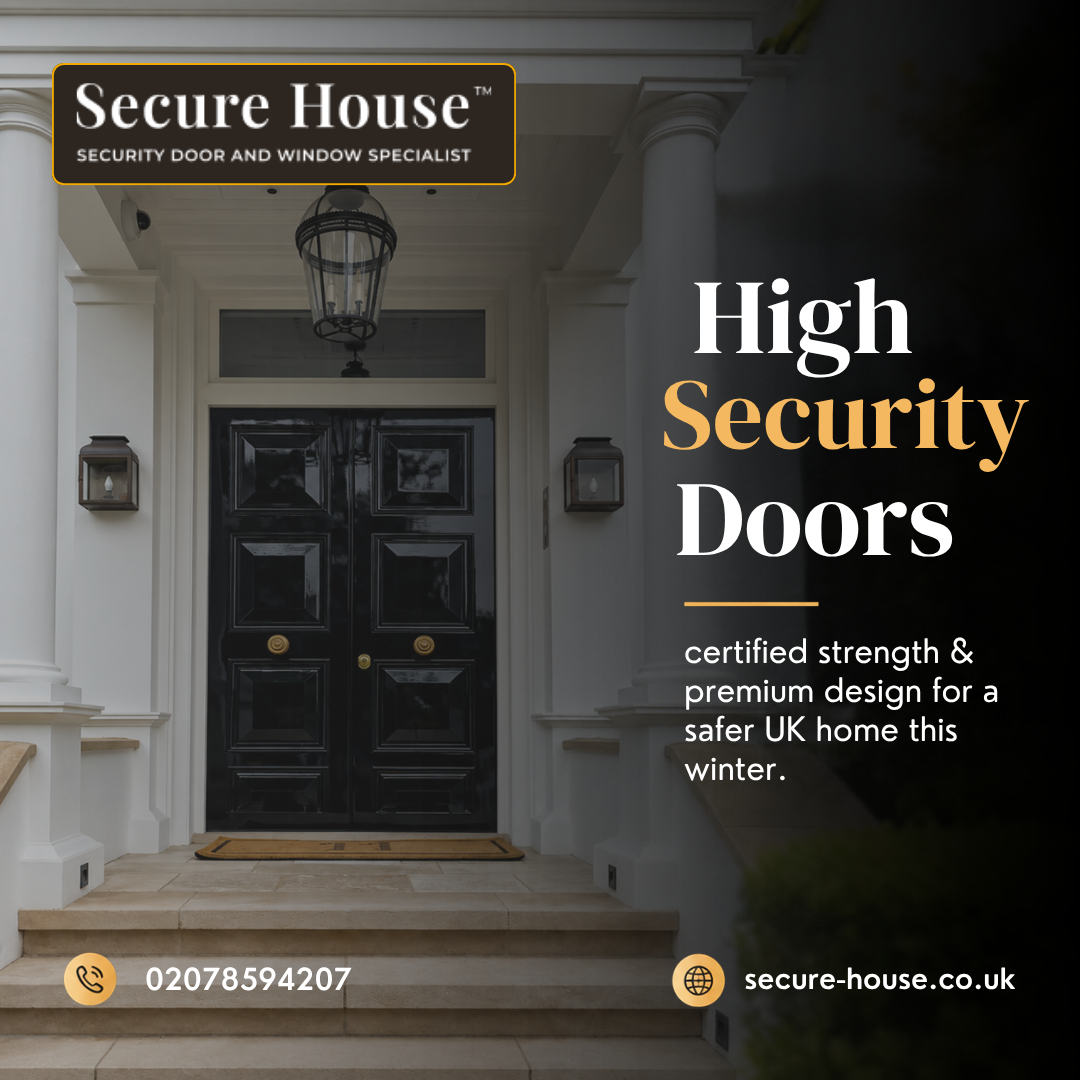
Your front door is the single biggest weak point in most UK homes. Forced entry most often happens through a door rather than a window, which makes the door the highest-leverage security upgrade a property can have. This security door buying guide walks you through everything to consider before you buy – ratings, materials, hardware and cost – so you can make an informed, one-time decision.
Two accreditations matter above all others: PAS 24:2022 and Secured by Design. This guide is a practical, jargon-free resource for homeowners, architects, builders and property developers choosing high security doors for UK properties.
Why This Matters
Most forced entries happen through doors, not windows, so the door is the first place to invest. UK insurers increasingly look for PAS 24 or Secured by Design accreditation when assessing risk, and a poor purchase decision often means redoing the job within a few years.
Treat a security door as a long-term investment in family safety, insurance standing and property value – not a quick cosmetic upgrade.
What Counts as a “Security Door” in the UK?
A security door is a door set designed and tested to resist forced entry. Unlike a standard front door, it combines multi-point locking, a reinforced frame and certified glazing or panels, and it carries independent test evidence such as PAS 24 or an RC rating.
Not everything sold as a “security door” meets those standards, so buyers should always ask for proof. Genuine security front doors can show a test certificate for the complete door set, not just a lock or a marketing claim.
Understanding UK Security Certifications (PAS 24, Secured by Design, RC Ratings)
PAS 24:2022 is a UK specification that tests how well a door set resists common methods of forced entry. Secured by Design is the police-endorsed security initiative, often specified for new-build developments. RC ratings (Resistance Classes) come from the European standard EN 1627 and describe resistance against specific tools – RC2 and RC3 are the classes most relevant to homes. Explore the wider range of RC rated doors if you need more than baseline protection.
Expert tip: always request the test certificate, not just a supplier’s claim.
Materials: Steel, Timber, Composite and Aluminium Doors
Each core material trades off security, insulation, maintenance and appearance. Steel offers the highest strength and minimal upkeep; timber delivers traditional looks but needs regular care; composite balances insulation and low maintenance; aluminium is slim and durable but varies widely in security performance.
Steel-core, timber-clad hybrid doors are a common premium UK choice, blending kerb appeal with strength. The common mistake is choosing purely on looks without checking the core material behind the finish.
Locking Systems and Hardware
Multi-point locking secures the door at several positions along the frame instead of a single latch, spreading force across the whole door set. Anti-drill and anti-snap cylinders protect against the most common lock attacks, and hinge-side security stops the door being levered away from its hinges.
Buying tip: count the locking points and ask about cylinder security grading, such as TS007 3-star or a manufacturer’s own tested equivalent.
Fire Safety and Building Regulations Compliance
Approved Document Q covers the security of doors in new dwellings in England and typically points to PAS 24 or equivalent. For flats and HMOs, fire door requirements may also apply to entrance doors.
Communal and rented properties can carry additional legal obligations that private homeowners do not, so check the requirements for your property type before ordering.
Sizing: Standard vs Bespoke Doors
When a Standard Size Is Enough
If your opening is a common modern size and in good condition, a standard-size certified door is usually sufficient and quicker to supply.
When to Choose Bespoke
Older properties, non-standard openings and listed buildings usually need a made-to-measure door. Bespoke doors cost more to produce, but they avoid the ill-fitting gaps that undermine a door’s rated performance. For a deeper look, read why bespoke door manufacturers are essential.
Cost Factors and What Affects Price
Price is driven by the core material, the security rating, glazing, door size, hardware and installation complexity. A higher rating, bespoke sizing or specialist glazing will all change the overall investment.
Compare suppliers on specification, like for like, rather than on price alone. Two doors that look similar can differ enormously in tested performance.
Installation: Why Professional Fitting Is Non-Negotiable
A certified door that is badly fitted loses its rated performance. Installation quality is part of the security, not an add-on.
Warranty and aftercare are affected too: DIY fitting can invalidate cover and may not satisfy an insurer, whereas certified installation protects both the rating and the guarantee.
How to Choose the Right Supplier
Start by checking accreditations and requesting test certificates. Read verified customer reviews, ask about warranty and aftercare, and arrange a home survey before committing to an order. If you are comparing the best front doors for security UK suppliers offer, a survey is the quickest way to see who understands your property.
Comparison: Standard vs PAS 24 vs RC2 vs RC3 Doors
Door type
Resistance level
Typical tools resisted
Best suited to
Standard door
No certified forced-entry resistance
Very little; vulnerable to kicking and basic levering
Low-risk or secondary entrances
PAS 24 door
UK-tested baseline for forced entry
Common tools used in opportunistic attacks
Entry-level domestic use
RC2 door
Resistance Class 2 (EN 1627)
Screwdrivers, pliers and wedges
Insurer-recommended homes
RC3 door
Resistance Class 3 (EN 1627)
Crowbar attack in addition to RC2 tools
High-risk or urban properties
Buying Checklist
Confirm PAS 24:2022 or Secured by Design accreditation.
Check the RC rating if higher security is needed.
Verify the multi-point locking system and cylinder grade.
Ask for third-party test certificates, not just marketing claims.
Confirm the door suits your property type (period, new-build, flat).
Check the U-value/insulation rating if energy efficiency matters.
Clarify that certified installers carry out the fitting.
Ask about warranty length and aftercare/maintenance support.
Get a home survey before finalising size and design.
Compare suppliers on accreditation and reviews, not price alone.
Common Mistakes
Trusting “security door” marketing claims without checking certification.
Choosing based on appearance alone.
Overlooking installation quality, which affects the door’s real-world rating.
Not checking building regulations for flats and communal entrances.
Ignoring cylinder lock grading.
Buying a standard door for a non-standard opening.
Skipping a professional survey to save cost.
Expert Tips
Always request the RC or PAS 24 test certificate before purchase.
Match the door’s security level to the actual crime risk of the area.
Confirm accreditation covers the whole door set, not just the lock.
Prioritise hinge-side security – a common weak point.
Consider a bespoke door for older or listed properties.
Factor in servicing needs, not just the upfront purchase.
Conclusion
Buying a security door is about matching certification, material and installation quality to your property’s real risk profile – not choosing on price or looks alone. Request certification evidence, insist on certified fitting and get a professional survey before you commit.
Ready to find the right door? Book a free consultation or survey with Secure House’s security specialists today.
Frequently Asked Questions
What is the difference between a security door and a standard front door?
A security door is built and tested to resist forced entry, with multi-point locking, a reinforced frame and certified glazing or panels. A standard front door is designed mainly for weather protection and appearance, and offers far less resistance to kicking, levering or drilling.
What is a PAS 24 rated door?
PAS 24:2022 is a UK specification that tests how well a door set resists common methods of forced entry. A PAS 24 door has passed that testing as a complete set, including frame, locks and glazing, and is widely used as a baseline by insurers and developers.
Are steel security doors better than timber ones?
Steel-core doors generally achieve higher resistance ratings and need less maintenance, while timber offers a traditional look. Many buyers choose a steel-core, timber-clad hybrid for both. Always check the tested rating of the specific door set rather than the material alone.
Do I need a certified installer for a security door to remain valid?
Yes. A certified door that is badly fitted can lose its rated performance, and DIY fitting may affect your warranty and insurer expectations. Professional installation is part of the security, not an optional extra.
Are security doors required by UK building regulations?
Approved Document Q sets security requirements for doors in new dwellings in England, typically by reference to PAS 24 or equivalent. Existing homes are not generally required to upgrade, but flats, HMOs and communal entrances may have fire door or other obligations.