21 October 2026 — Secure House Admin
Everything You Need to Know About RC-Rated Security Doors
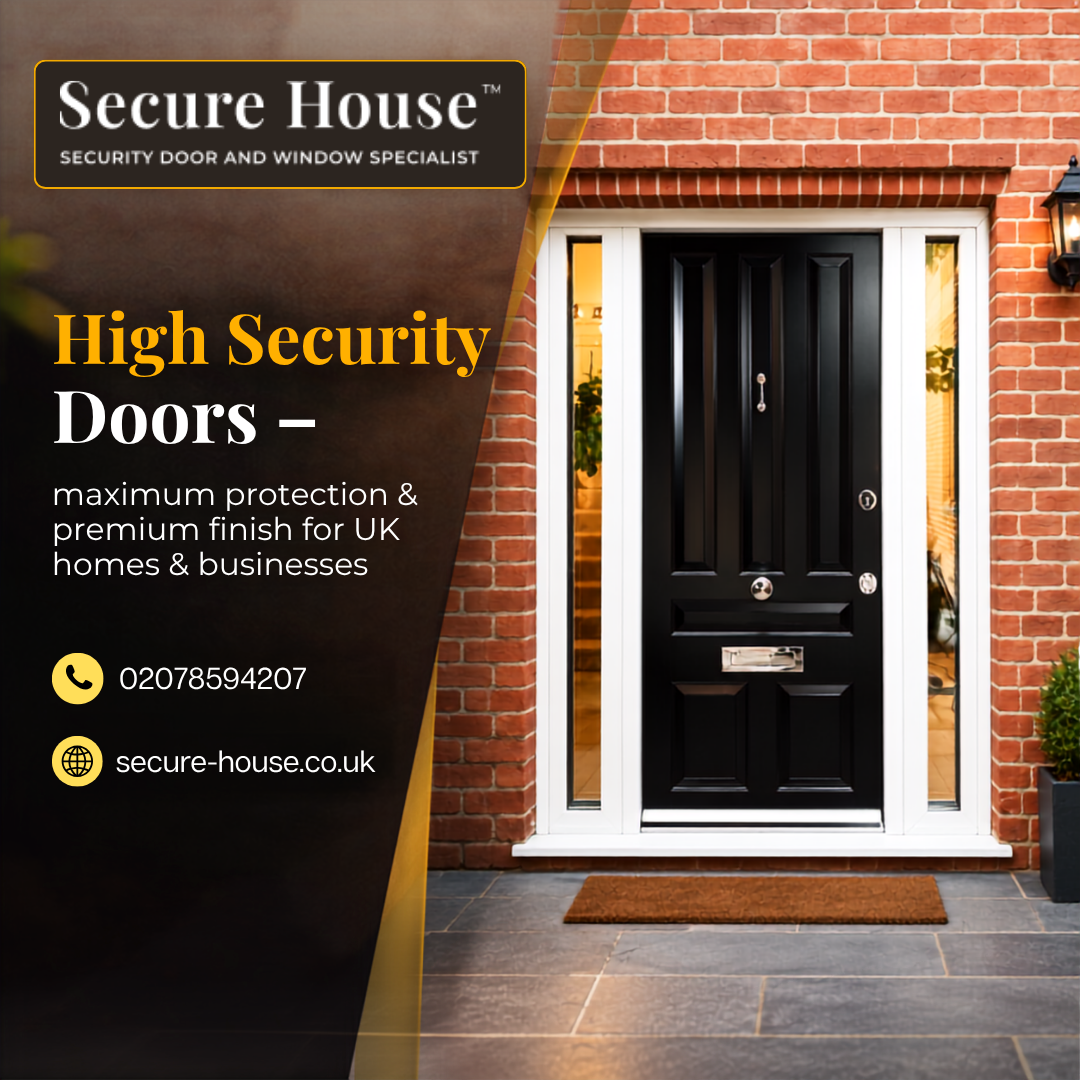
RC rated security doors are tested to a recognised Resistance Class (RC) standard, giving buyers proof of how well a door resists forced entry. UK homeowners, architects and security consultants increasingly ask for verified ratings rather than vague claims such as “high security”.
This guide explains what RC ratings mean, how doors are tested to earn them and how to choose the right class for your property, whether you are specifying high security front doors for a home or something more demanding for commercial use.
Why This Matters
Break-ins are largely opportunistic and time-based. An intruder who cannot get through a door within a short, set time will in most cases move on.
RC ratings quantify how long a door resists specific tools, giving buyers, insurers and architects a measurable standard instead of a marketing claim.
What Is an RC Rating and How Is It Tested?
An RC rating (Resistance Class) is a classification showing how long a complete door set resists a defined level of forced-entry attack. Ratings come from EN 1627:2011, the European standard for burglar resistance.
Testing takes place in an accredited laboratory, in the style of IFT Rosenheim testing. The door, frame, locking and any glazing are tested together, first under static and dynamic loading and then with a manual attack using defined tool sets within a set time.
RC1 vs RC2 vs RC3 vs RC4 Explained
RC1 resists basic physical force such as kicking or shoulder charging, with no tools involved, and suits low-risk situations. RC2 is tested against simple tools such as screwdrivers, pliers and wedges for around three minutes and suits standard domestic use.
RC3 adds crowbar attack and is tested for around five minutes, making it a strong choice for higher-risk homes. RC4 is tested against heavier tools such as hammers, axes, chisels and battery-powered drills for around ten minutes, and suits high-risk commercial premises and secure rooms.
How RC Ratings Are Achieved (Frame, Locking, Glazing)
As the class increases, the physical build changes: thicker steel lining, more reinforced locking pins, drill-resistant plates over the cylinder and, where relevant, glazing specified to match the rating.
The frame is part of the rating too. A strong leaf in a weak frame will not deliver the tested result.
Which RC Rating Do You Actually Need?
For a standard UK home, RC2 gives a solid step up from a basic door, and RC3 is commonly recommended as the practical standard for UK residential properties. High-risk urban properties and homes with high-value contents should consider RC3 or above, while commercial premises and panic room applications may call for RC4.
Choose by the property’s real risk level, not just by budget.
RC Ratings vs PAS 24 and Secured by Design
These standards are often conflated. PAS 24 and Secured by Design are UK-specific: PAS 24 is a UK test specification and Secured by Design is a police-backed accreditation scheme. RC ratings derive from the European EN 1627:2011 standard.
A door can meet one, several or all of them, so always ask which certificates apply to the specific door set you are buying.
Installation’s Role in Maintaining the RC Rating
A badly installed RC3 door does not perform to RC3 in practice. The frame must be correctly fixed into a sound structural opening for the tested performance to hold.
That is why certified installation is a stated requirement, not an optional extra.
Materials Used in RC-Rated Doors
Higher RC classes are typically achieved with steel-lined, timber-clad hybrid doors and galvanised steel frames. Multi-layer insulation, such as rock wool or foam, is used inside the leaf so that strength does not come at the cost of thermal performance.
For buyers wanting a made-to-measure finish, bespoke doors can be built around an RC-tested construction. See also this overview of premium bespoke security entrances.
Panic Rooms and Safe Rooms: Where RC4 Applies
A panic room door or the doors to safe rooms must withstand sustained, determined attack while occupants wait for help. RC4 is designed for exactly that, which is why it is specified for high-net-worth homes and commercial premises needing maximum resistance to forced entry.
Safe room doors need the same attention to the frame and locking as the leaf itself, and a panic room door should always be professionally surveyed and installed.
Common Misconceptions About RC Ratings
RC-rated does not mean bulletproof or fireproof. A higher price does not automatically mean a higher rating. Ratings apply to the tested door set, not to every door in a manufacturer’s range.
Always match the certificate to the exact model you are buying.
Buying Guide: Choosing an RC-Rated Door Supplier
Check the certificate, ask which laboratory tested the door, confirm the installer is certified and verify that the certificate matches the specific model being purchased. A reliable supplier will share this evidence without hesitation, whether you need standard RC2 or advanced high security front doors.
Comparison: RC2 vs RC3 vs RC4
Class
Tools resisted
Approx. resistance time
Recommended use
RC2
Screwdrivers, pliers, wedges
Around 3 minutes
Standard home
RC3
RC2 tools plus crowbar
Around 5 minutes
Higher-risk home
RC4
Hammers, axes, chisels, battery-powered drills
Around 10 minutes
Panic room or commercial premises
Buying Checklist
Confirm the exact RC rating and which laboratory certified it.
Match the rating to the property’s actual risk level, not just budget.
Check the locking pin count and steel lining thickness.
Verify any glazing is rated to match the door.
Confirm certified installation is included.
Ask whether the frame is covered by the rating, not just the leaf.
Confirm the door can open inward or outward as the property requires.
Request the EN 1627:2011 test certificate.
Common Mistakes
Assuming a higher price automatically means a higher RC rating.
Not verifying the certificate matches the exact model purchased.
Ignoring the frame’s contribution to the overall rating.
Believing RC-rated means fireproof or bulletproof.
Skipping certified installation.
Choosing RC4 unnecessarily for a low-risk property and overspending.
Expert Tips
For most UK homes, RC3 offers the best balance of security and cost.
Cross-check the test certificate number against the manufacturer’s records.
Ask whether the rating applies to the full door set (frame, leaf and glazing).
Commercial or high-value properties should consider RC4.
Pair an RC-rated door with a monitored alarm for layered security.
Conclusion
RC ratings give buyers an evidence-based way to compare security doors rather than relying on marketing terms. Request the certification, check it covers the full door set and match the class to your real risk profile.
Not sure which class suits your property? Consult Secure House for an RC-rated door recommendation.
Frequently Asked Questions
What does RC2 mean on a security door?
RC2 is Resistance Class 2 under EN 1627:2011. The door set is tested against attack with basic tools such as screwdrivers, pliers and wedges, and is designed to resist for around three minutes under test conditions.
What is the difference between RC3 and RC4 doors?
RC3 is tested against a crowbar-type attack for around five minutes. RC4 is tested against heavier tools such as hammers, axes, chisels and battery-powered drills for around ten minutes, which makes it suited to panic rooms and high-risk commercial premises.
Is RC3 enough security for a UK home?
For most UK homes, RC3 is commonly recommended as a practical balance of protection and cost. Higher-risk properties or those holding high-value contents may justify RC4. Match the class to your actual risk level.
How are RC ratings tested?
An accredited laboratory tests the complete door set, including frame, locking and glazing, under static and dynamic loading, followed by a manual attack with a defined tool set within a set time, in line with EN 1627.
Do RC-rated doors need certified installation?
Yes. A rated door only performs as tested if the frame is correctly fixed into a sound structural opening. Certified installation is needed for the rating to hold in real-world conditions.