

17 November 2026 — Secure House Admin
Secure Front Doors: What Makes a Door Truly Burglar-Resistant
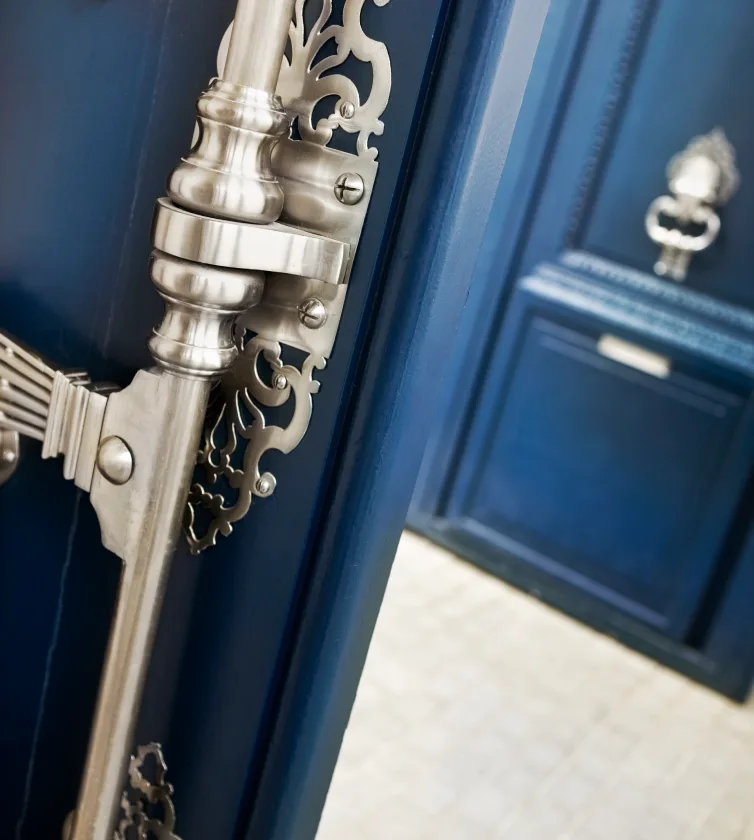
Secure front doors resist forced entry because the whole assembly (leaf, frame, locks, hinges, glazing and fixings) is designed and fitted to work together. A strong lock alone does not make a door burglar-proof. In the UK, look for doors tested to PAS 24, backed by independent certification and installed to the tested specification.
What makes a front door resist forced entry?
Burglars usually go for the easiest point: the lock, the hinges, the glazing or the frame. A door that resists attack therefore needs a solid leaf, a reinforced frame, quality locking at several points, protected glazing and proper fixing to the wall. A weakness in any one area can undo the strengths elsewhere.
Why does the complete door assembly matter?
- Frame: Common weak point: Flexing or splitting under force; What to look for: Rigid construction, fixed securely to the opening
- Hinges: Common weak point: Levered or cut on the hinge side; What to look for: Strong hinges with hinge bolts or equivalent protection
- Lock and cylinder: Common weak point: Drilled, snapped or picked; What to look for: Quality locking and a cylinder with anti-snap protection
- Keeps and strike plates: Common weak point: Pulled out of the frame; What to look for: Reinforced keeps with long fixings
- Glazing: Common weak point: Broken to reach the handle or lock; What to look for: Laminated glass retained from inside
- Fixings: Common weak point: Frame pried from the wall; What to look for: Appropriate fixings at stated intervals
How do multi-point locking systems work?
A multi-point lock secures the door at several positions along the edge, commonly with hooks or bolts engaging keeps in the frame. Lifting the handle engages the mechanism and turning the key throws deadbolts. Spreading the load reduces the chance of the door being forced open at a single point. Quality varies, though, so check the cylinder, the keeps and how the door is fitted, not just the number of points.
Which door materials and construction methods should you consider?
Doors are made from timber, composite, steel, aluminium and uPVC, among others. Security comes from how a door is constructed, including core, skins, reinforcement and frame, rather than from the name of the material. Appearance, thermal performance and maintenance also differ, so weigh these against your security needs.
What are PAS 24 and other security certifications?
PAS 24 is a UK test specification for the enhanced security performance of doorsets, based on simulated attack by an opportunist intruder using common tools. In England, Approved Document Q sets security requirements for new dwellings and points to PAS 24 or an equivalent. Always check which edition of the standard applies. These schemes are related but not interchangeable:
- PAS 24: Test specification for doorset and window security
- Secured by Design: Police-backed initiative that accredits tested and certified products
- TS 007 / SS 312: Ratings associated with cylinder and cylinder-protection performance
- BS 3621: Standard for thief-resistant mortice locks, often referenced by insurers
- EN 1627 / LPS 1175: Higher-level resistance classes and security ratings for demanding applications
Are security ratings the same as fire ratings?
No. PAS 24 and similar standards address resistance to burglary. FD30 and FD60 describe fire performance and are separate tests. A door may carry one rating, both or neither, so ask for evidence of each requirement for the exact door.
What about glazing, letterboxes and hardware?
Glazing should be laminated and held from the inside so it cannot be removed from outside. Letterboxes can allow fishing for internal handles or keys, so consider anti-fishing designs or a letter cage. Hardware choices such as protected escutcheons, door viewers and restrictors also add resilience.
How important is installation and frame anchoring?
Very. A strong door in a poorly fixed frame can be levered out of the wall. Installers should fix the frame at the specified positions, pack and seal correctly, and follow the tested configuration. A certified product loses its advantage if it is installed differently from the way it was tested.
Which security features should you compare before buying?
- Evidence of testing and certification for the exact door and size.
- Quality of hinges, hinge protection and locking points.
- Cylinder performance and whether it has anti-snap, anti-pick and anti-drill features.
- Glazing type and how it is retained.
- Frame construction and the fixing method.
- Warranty terms and installation arrangements.
How should you maintain a front door?
Check the alignment, keeps, hinge screws, cylinder operation and seals regularly. Lubricate moving parts as the manufacturer recommends and fix a binding door promptly, because a poorly closing door can leave the locks only partly engaged.
Checklist: selecting secure front doors
- Confirm the standards and certificates for the complete door.
- Check that the supplier explains frame, hinges and fixings, not only locks.
- Ask who will install and how the installer follows the tested specification.
- Check your insurer's requirements in writing.
- Confirm fire, thermal and accessibility needs separately.
Can you upgrade an existing door instead of replacing it?
Sometimes. Where the door and frame are sound, upgrades such as a higher-performance cylinder, hinge bolts, a security chain or restrictor, and reinforced keeps can improve resistance at modest cost. However, these additions do not turn an ordinary door into a tested security door. If the leaf is thin, the frame is weak or the glazing is easily removed, replacement is usually the more effective route.
A surveyor or door specialist can assess the opening and explain what an upgrade can realistically achieve. Ask for the reasoning in writing so you can compare it with a full replacement quote on a like-for-like basis.
How Secure House can help
Secure House manufactures bespoke high security doors and explains its protection levels so you can compare options. Browse the door styles and use the contact page to request a quote.
Frequently Asked Questions
What is the most secure type of front door?
There is no single answer. A door built with a robust leaf, reinforced frame, multi-point locking, protected glazing and correct installation will outperform a basic door, whatever the material. Ask for certification evidence for the exact product.
Does a multi-point lock make a front door burglar-proof?
No. It improves security by spreading the locking load, but the cylinder, frame, hinges, glazing and installation all affect performance. No lock can make a door burglar-proof by itself.
What does PAS 24 mean for secure front doors?
PAS 24 is a UK test specification for enhanced security performance of doorsets and windows. A door that meets it has passed standardised tests simulating common attack methods. It is not the same as Secured by Design, although certified products may be part of that scheme.
Are secure front doors also fire doors?
Not automatically. Security standards and fire resistance ratings are tested differently. If you need both, check that the exact door has evidence for each.
How do I know my front door was installed securely?
Ask the installer how the frame was fixed and whether the work follows the tested specification. Then check that the door closes smoothly, locks engage fully and there are no visible gaps or movement in the frame.